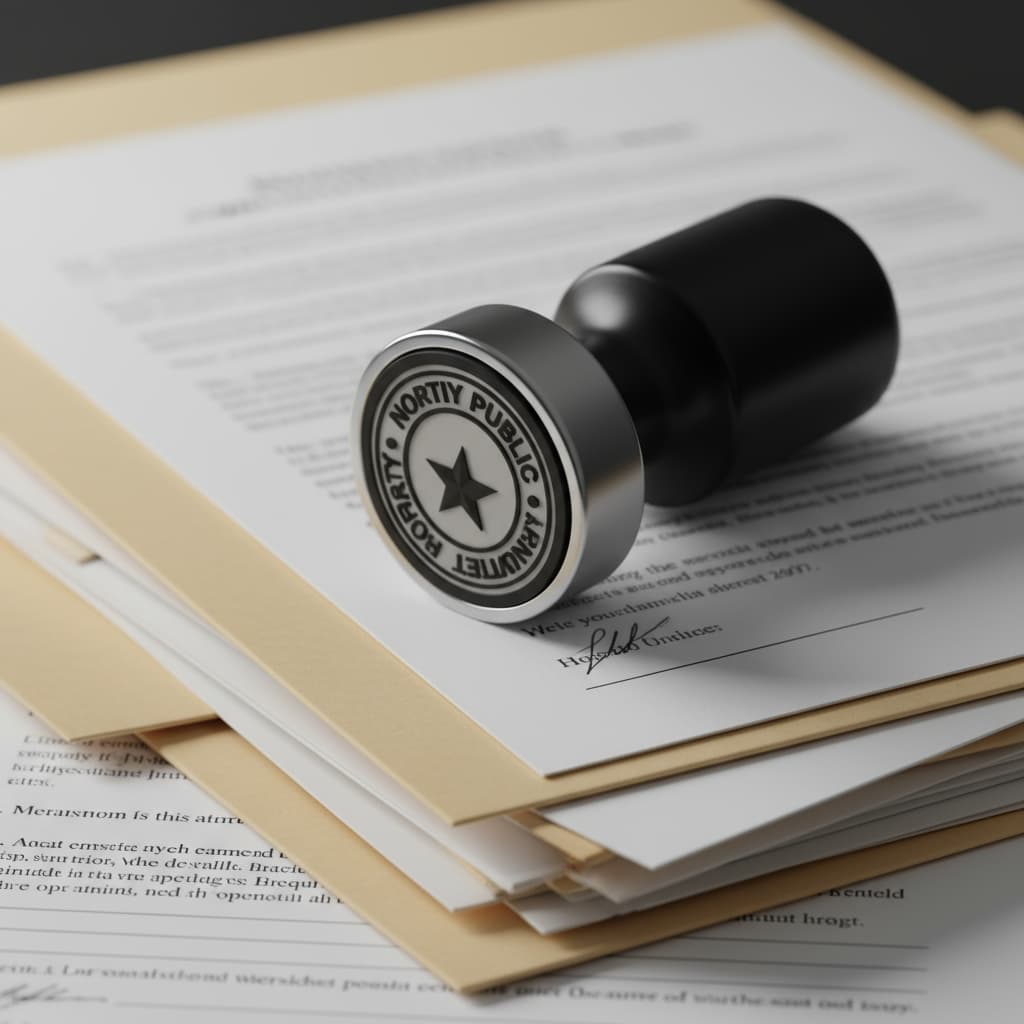
Becoming a Notary Public is a straightforward process, but it requires careful attention to detail and a clear understanding of your state’s specific laws. The requirements vary significantly from one state to the next, so your first step is to research your local rules.
Here is a general roadmap to get your notary commission:
Meet Your State’s Qualifications: All states require you to be a legal resident, at least 18 years old, and have no felony convictions. Some states may also require you to be a resident of that county or be a U.S. citizen.
Complete a Training Course (if required): Many states, like California and Pennsylvania, require you to take a mandatory training course before you can apply. These courses cover state laws, notary responsibilities, and best practices.
Pass an Exam (if required): Some states, like California, also require you to pass a state-administered exam. This test ensures you understand your legal duties and the proper procedures for notarization.
Submit Your Application: After completing your training and passing any required exams, you will submit a formal application to your state’s Notary Public administrator. You will need to provide your personal information, pay an application fee, and often submit to a background check.
Get Your Supplies and File Your Bond: Once your application is approved, you will need to get your official notary seal or stamp and a notary journal. Most states also require you to purchase a notary surety bond, which protects the public from financial harm in the event of a notary error.
By following these steps, you will be well on your way to becoming a trusted and legally empowered public official.
I learned the hard way that in CA you’ve gotta file your oath and surety bond within 30 days of getting your commission — miss it and you start over, ugh. My tip: print your state’s checklist and line up the bond before your background check clears so you can file everything at the county clerk the same day. Did you run into timing gotchas like that?
I keep a small laminated card with my state’s exact acknowledgment and jurat wording; if the document’s certificate isn’t compliant, I attach a loose cert and copy it verbatim so I don’t improvise under pressure — saved me a couple times. Anyone else keep a cheat card?
Double-check the exact name you put on your commission and seal matches your ID; I had to re-order my stamp ($28 and a week lost) because I used a middle initial that isn’t on my license. And if your local rules require fingerprinting, book it immediately after you pass the course — appointments were two weeks out here and it stalled my commission, ugh.
I add E&O insurance as soon as my commission arrives — my $25k policy runs about $40/year and once covered a re-sign when a deed got kicked back. It’s not required and doesn’t replace your bond, @OP, but if you’re following the “research your local rules” step, it’s an easy add-on that buys peace of mind.
And one thing that saved me a headache: wait to order your stamp until you see exactly how your name prints on the commission. My first commission dropped my middle initial and I would’ve eaten a $30 stamp reorder; @steadytraveler67 is right about timing — some vendors take a week to ship. Also, a quick skim for “approved vendors” in your state handbook never hurts.